How to read your cash-flow forecast: a plain-language guide
You don't need finance training to use a cash-flow forecast. What the four key numbers mean, why the lowest point matters most, and what to do when the forecast looks bad.
"Cash-flow forecast" sounds like something only accountants and banks need. It isn't. A forecast answers one simple question that every business owner asks: will I have enough money when I need it?
This guide explains how to read one in plain language, using the forecast in FinFlow as the example. You don't need any finance training.
What a cash-flow forecast is (and isn't)
A forecast is your best estimate of how much money your business will have on each day in the coming weeks. It is built from:
- What usually happens: your normal sales and spending, based on the last few weeks or months.
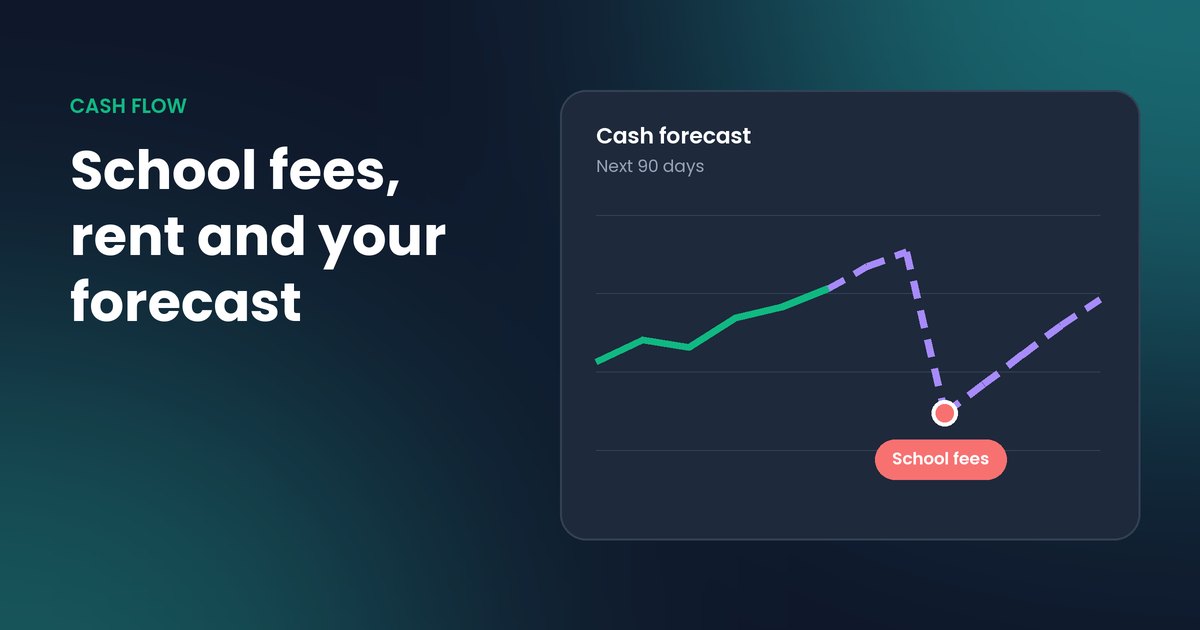
- What you know is coming: invoices customers are due to pay, and big payments you have planned, like school fees or rent.
It is not a promise. It's like a weather forecast. It won't be exactly right, but it tells you whether to carry an umbrella.
It is also not the same as profit. A business can be profitable on paper and still run out of cash, because customers pay late or a big bill lands before the money comes in. That's exactly why the forecast matters.
The four numbers to look at first
At the top of FinFlow's Forecasting page you'll see four numbers. Read them in this order.
1. Current balance. How much money the business has today, based on the transactions you've recorded or imported. If this looks wrong, everything below it will be wrong too, so import your latest bank statement first.
2. Projected balance. Where your balance is expected to be at the end of the period you picked: 30, 60 or 90 days from now.
3. Projected change. The difference between the two. Green means the business is expected to grow its cash. Red means it is expected to shrink.
4. Lowest point, and when. This is the most important number on the page, and the one most people skip.
Why the lowest point matters most
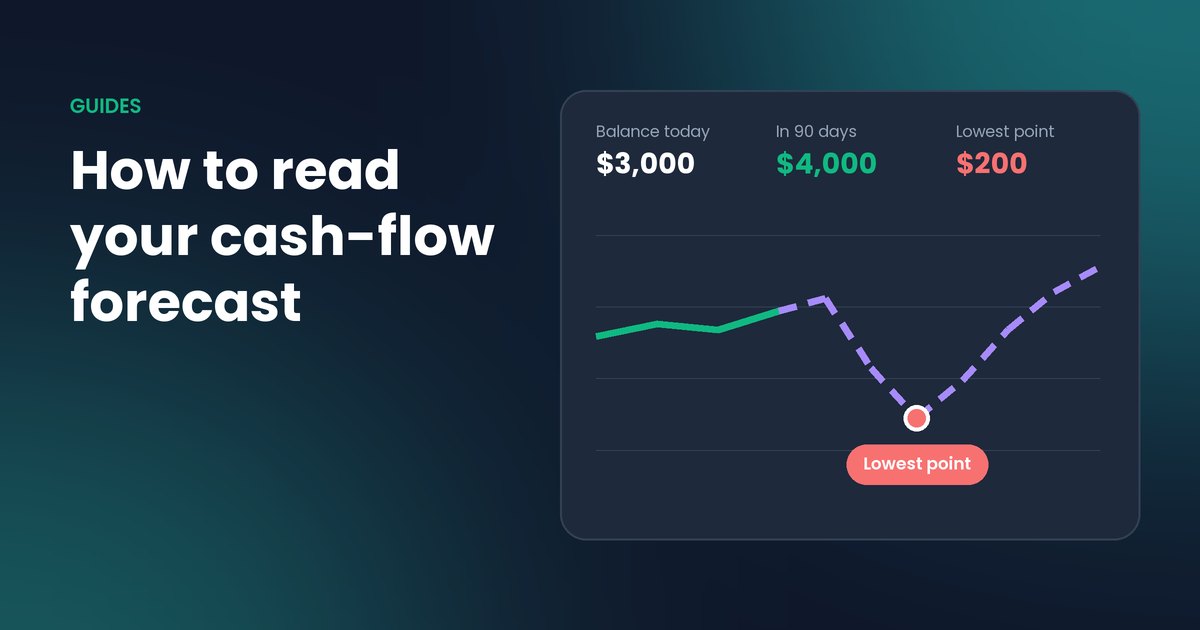
Imagine your balance today is $3,000 and the forecast says you'll have $4,000 in 90 days. Good news? Maybe.
But if school fees of $2,500 go out in January and your biggest customer usually pays in February, your balance might dip to $200 in the middle. If rent and salaries are due that same week, you have a problem, even though the 90-day number looks healthy.
The lowest point shows you that dip, and the date it's expected. If it's close to zero, or below zero (shown in red), that's your early warning. You now have weeks, not hours, to do something about it.
Reading the chart
The chart shows your past balance and your forecast balance side by side.
- The solid green line is what actually happened, from your recorded transactions.
- The dashed purple line is the forecast. Look for sudden drops: those are usually planned payments like school fees or rent. Look for steps up: those are usually invoices falling due.
- Hover over or tap any day to see the expected balance on that date, and any invoice or planned payment that falls on it.
A forecast that slopes gently upward is healthy. One that slopes downward means you're spending more than you earn each day on average, and it's worth finding out why.
What to do when the forecast looks bad
A worrying forecast is useful. It means you found out early. Some options, roughly from easiest to hardest:
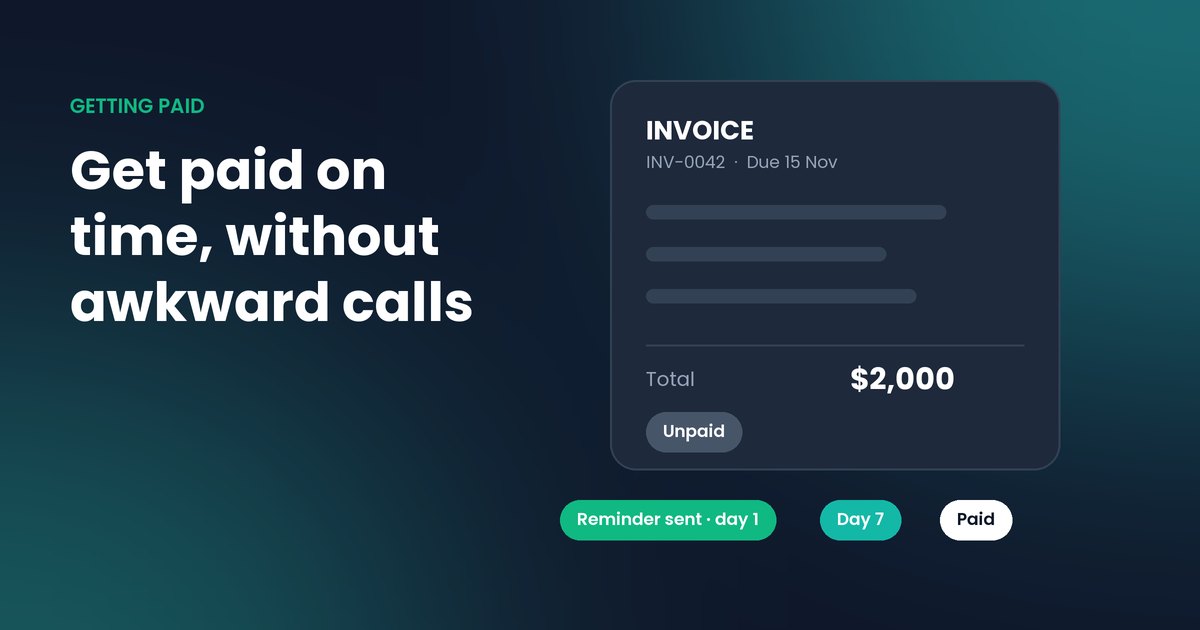
- Chase overdue invoices. Money customers already owe you is the fastest cash available. (FinFlow can send these reminders for you.)
- Move a planned payment. Can a big purchase wait two weeks, until after the dip?
- Ask a supplier for more time, before the bill is due, not after.
- Reduce what you take out personally that month, if the business can't carry it.
- Talk to your bank early if you need a short-term facility. Banks are far friendlier to "I can see a gap in six weeks" than to "I can't pay salaries on Friday".
Make your forecast more accurate
A forecast is only as good as what you tell it. Three things make the biggest difference:
- Keep transactions up to date. Import your bank statement regularly, or add transactions as they happen.
- Send invoices from FinFlow, with due dates, so expected payments land on the right days.
- Add your planned personal withdrawals, like school fees, rent and family support, so big personal payments show up on their dates instead of being averaged away.
The bottom line
You don't need to read a forecast like an accountant. Check your balance, check where it's heading, and most of all, check the lowest point and when it happens. Do that once a week and cash surprises become very rare.