School fees, rent and your cash-flow forecast: why owner drawings matter
Most small business owners pay school fees and rent from the business. Here is why your forecast needs to know, and how to keep personal money from hiding inside your business numbers.
If you run a small business in Harare, Kampala or Lagos, you probably know this moment. The month is going well. Sales are steady, customers are paying. Then January arrives, school fees are due, and suddenly the business account looks very different.
Nothing went wrong in the business. The owner simply took out what the family needed. That is normal. Most small business owners pay school fees, rent and family costs from the business, especially in the early years.
The problem is not taking the money out. The problem is when your numbers don't know it's coming.
Why a cash-flow forecast gets this wrong
Most forecasts work by looking at the past and projecting it forward. If you made an average of $150 a day over the last three months, the forecast assumes something similar will happen next.
That works well for everyday sales and expenses. It works badly for big, lumpy personal payments:
- School fees come in three large payments a year, not a little every day.
- Home rent often goes out in one amount at the start of the month, or quarterly.
- A family wedding, a funeral, a trip home happen once, but they are big.
When a forecast averages these out, two things go wrong. In the months with no school fees, the forecast looks worse than reality, because it is quietly "paying" a bit of school fees every day. And in the month the fees are actually due, the forecast looks much better than reality, because it has spread that big payment thin across the whole year.
The second one is the dangerous one. It is exactly when you need a warning that the forecast stays quiet.
Business money and personal money are not the same thing
Accountants call money the owner takes out of the business owner drawings, and money the owner puts in from their own pocket an owner contribution. Neither is a business expense or business income:
- Paying your supplier is a business expense. Paying your child's school is not, even when it comes from the same account.
- A customer paying an invoice is business income. You topping up the account from your salary or savings is not.
Mixing them up makes your business look less profitable than it is in some months, and more profitable in others. It also makes it hard to answer the question every lender, investor or partner will ask: does this business make money on its own?
What to do about it
You don't need a separate bank account to fix this, although that helps. You need two habits.
1. Label personal money when it moves. When you take money out for yourself or your family, record it as an owner drawing, not as an expense. When you put your own money in, record it as an owner contribution. It takes a few seconds and keeps your business numbers honest.
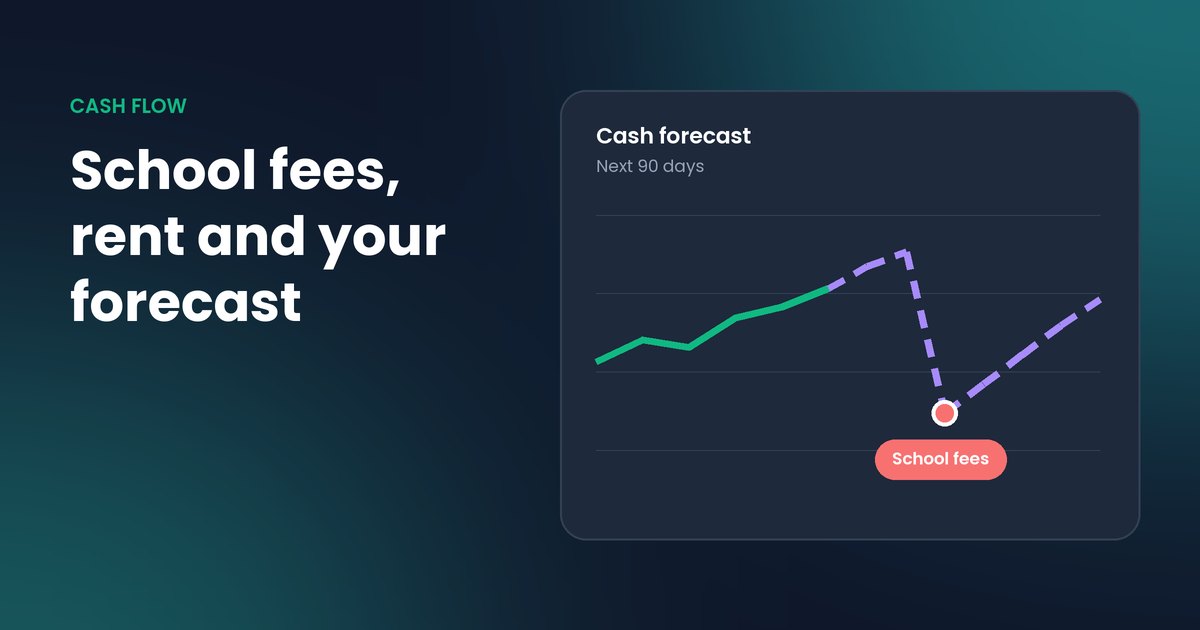
2. Tell your forecast what's coming. School fees are not a surprise. You know the amounts and roughly when they fall due. Write them down: the fees in January, May and September, the rent on the 1st of each month. A good forecast should then show each one as a dip on the day it lands, not as a little drip spread over the year.
Once you do this, the forecast can answer the real question: after the school fees go out in January, will the business still have enough to pay stock and salaries?
How FinFlow handles it
We built this into FinFlow after a business owner in Uganda put it to us plainly: does the forecast know when the owner takes money out for school fees or rent?
Now it does.
- Owner Drawings and Owner Contribution are their own categories. Money you take out for personal use, or put in from your own pocket, is kept apart from business income and expenses, so your reports show what the business itself earns and spends.
- Planned personal withdrawals. When you set up your forecast, FinFlow asks what you usually take out for yourself: school fees, rent, family support. You can set each one as monthly, or for selected months only (perfect for school terms), in any currency.
- They show up on the right day. Each planned withdrawal appears in your forecast as a dip on its date, so the lowest point on your forecast is real, and you see it weeks before it happens.
If you haven't told FinFlow about your planned withdrawals yet, your dashboard will remind you. It takes about two minutes.
The bottom line
Taking money out of your business for your family is not a mistake. It is often the reason the business exists. Just don't let it hide inside your numbers. Label it, plan it, and let your forecast warn you before the big months, not after.