How to get paid on time without awkward phone calls
Late payment is the biggest cash-flow problem for many African small businesses. Five habits that get invoices paid faster, and how to let the reminders send themselves.
You did the work. You delivered the goods. You sent the invoice. And now you wait.
For many small businesses across Africa, late payment is the single biggest cash-flow problem. Not a lack of sales, but sales that turn into cash weeks or months later than they should. Meanwhile, rent, salaries and suppliers do not wait.
The usual fix is to call the customer. Most business owners hate this part. It feels awkward, it takes time, and with a big customer you worry about damaging the relationship.
Here is how to get paid faster with fewer awkward calls.
1. Make the invoice easy to pay
Many invoices are paid late simply because they are hard to act on. Before you send one, check that it has:
- A clear due date, not just "payable on receipt". "Due 15 November" gets paid sooner than "30 days".
- The full amount and currency. If you work in USD and ZAR, say which.
- How to pay: bank details, mobile money number, or payment link, written out in full.
- Who it's from, with your business name and logo, so it doesn't get lost in a busy inbox.
- A short description of what it's for. The person paying is often not the person you dealt with.
2. Send it the same day
The longer you wait to invoice, the longer you wait to be paid. If the job is done, send the invoice today. Customers take an invoice that arrives the same day more seriously than one that turns up three weeks later.
3. Agree payment terms up front
Talk about money before you start the work, not after. "We invoice on delivery and payment is due within 14 days" is a normal thing to say. For a big order or a new customer, asking for a deposit is also normal and protects you.
4. Remind early, remind politely, remind more than once
Most late payers are not refusing to pay. They forgot, the invoice is buried, or it's waiting for someone to approve it. A short, friendly reminder solves most of these.
A simple rhythm that works:
| When | What to send |
|---|---|
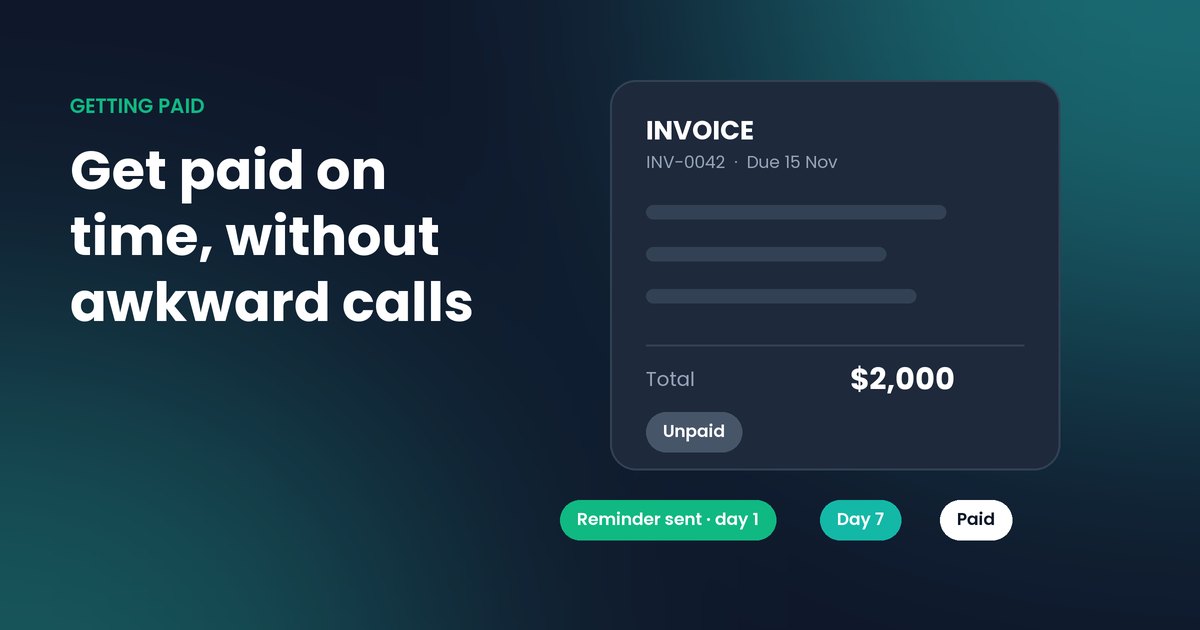
| 1 day after the due date | A friendly note: "Just a reminder that invoice INV-0042 was due yesterday." |
| 7 days after | A second reminder, with the invoice attached again. |
| 14 days after | A firmer reminder, and this is the point to pick up the phone. |
The key is consistency. Customers learn quickly which suppliers follow up and which don't, and they pay the ones who follow up first.
5. Don't count money you haven't received
This is the one that catches people out. If a customer owes you $2,000 and is three weeks late, it is tempting to count that $2,000 when you plan next month. Don't. Plan with the money that is likely to arrive, and treat overdue invoices as a bonus when they come in.
Let the reminders send themselves
Following up is simple, but it is easy to forget when you're busy running the business. That's why we built payment reminders into FinFlow.
- Email the invoice straight from FinFlow. Your customer gets the invoice, with your logo, and a secure link to view it online.
- Automatic reminders. Switch on payment reminders in Settings and FinFlow emails a polite reminder when an invoice is unpaid after its due date, by default 1, 7 and 14 days after. You can choose your own days.
- You stay in control. Paid invoices are never chased. And if you've agreed something special with a customer, you can pause reminders for that one invoice.
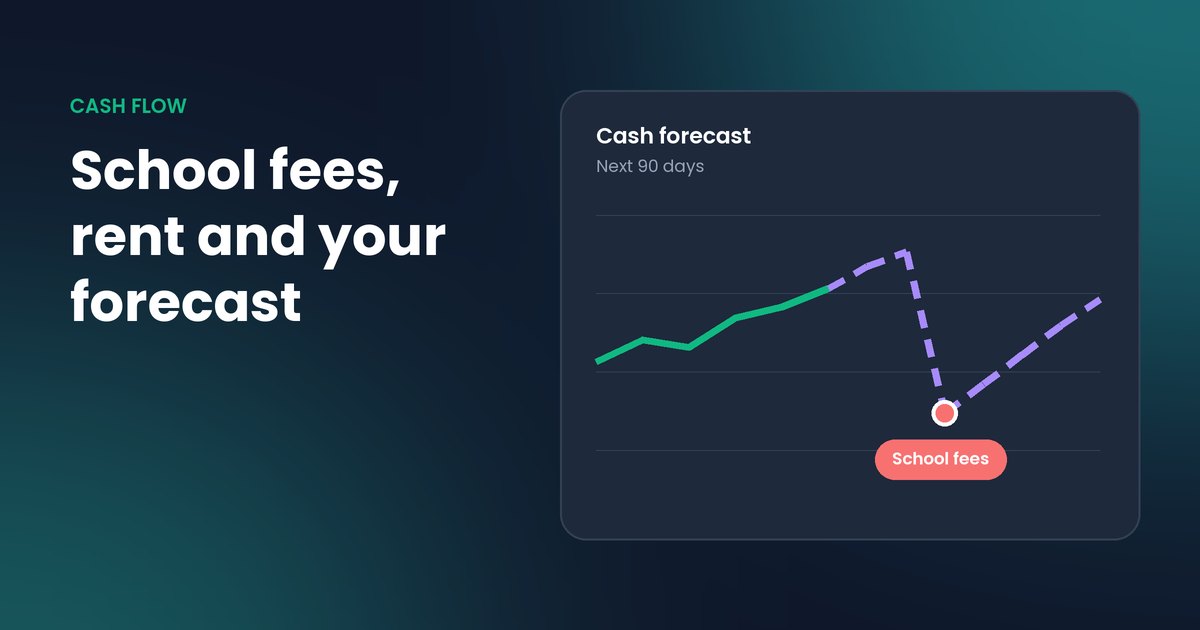
- Your forecast stays honest. FinFlow's cash-flow forecast counts invoices that aren't due yet on their due dates, and leaves overdue ones out, so a late payer can't make your future look better than it is.
The bottom line
Getting paid on time is mostly about habits: clear invoices, sent quickly, followed up every time. Do that, and the awkward phone calls become rare. Let a tool do the remembering, and they become rarer still.